The Accessibility Enhancement Act (BFSG) has been in effect since June 28, 2025. Many companies aren’t even aware that they’re affected. We’ll explain what this means, who it applies to, and what specific steps you need to take now.
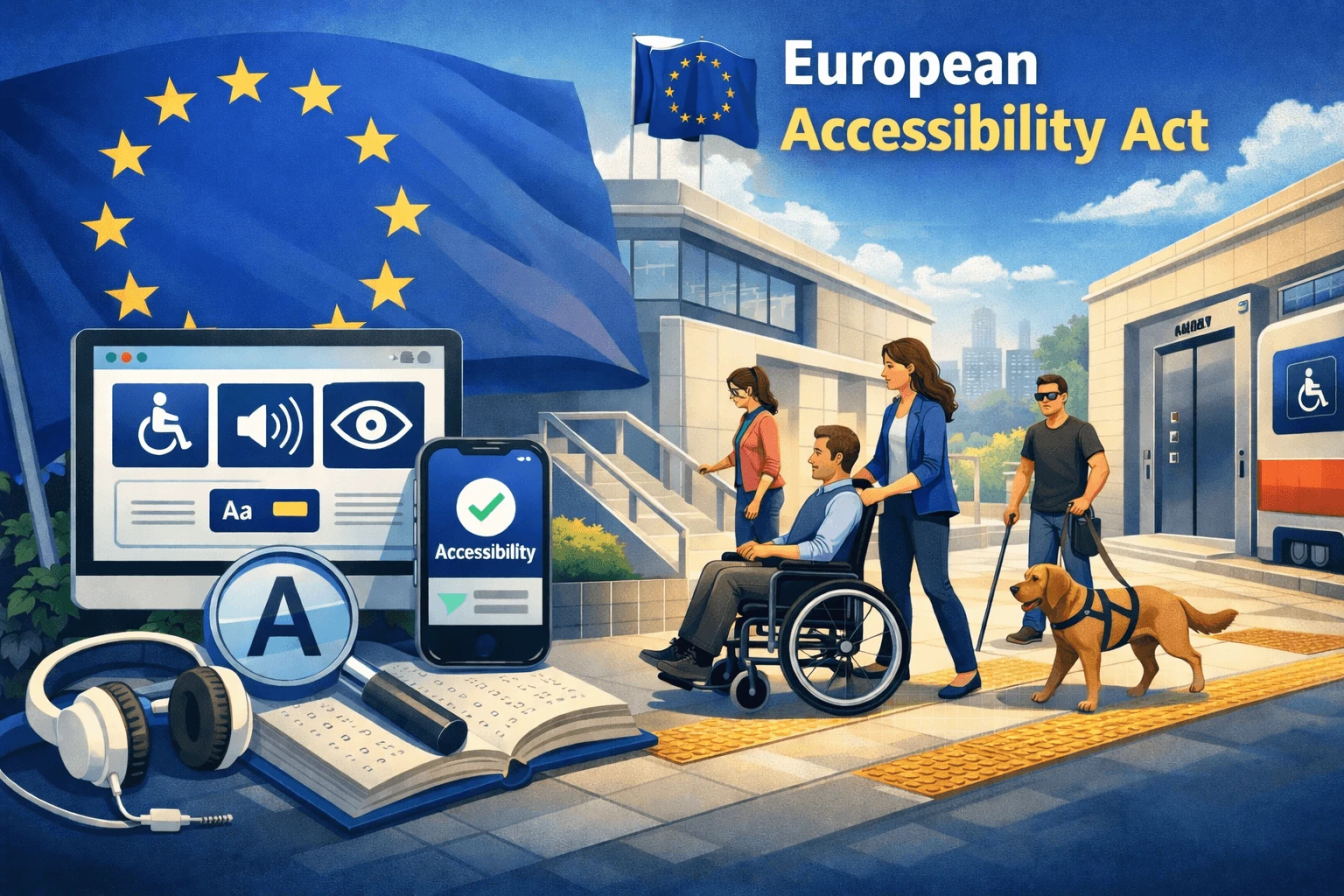

As of June 28, 2025, the Barrierefreiheitsstärkungsgesetz – or BFSG for short – is in effect. Many businesses don't even know they're affected. We explain what it means, who it applies to, and what you need to do right now.
The BFSG didn't come out of nowhere. It transposes the European European Accessibility Act (EAA) into German law – and had years of lead time. Despite that, the majority of businesses simply missed it.
The goal: people with disabilities should be able to use digital services on equal terms. Accessibility doesn't just mean wheelchair ramps – it means a website that works for someone who is blind, has a motor impairment, or is hard of hearing.
Until 2025, accessibility requirements applied almost exclusively to public bodies. The BFSG now extends those obligations to private companies offering digital services to consumers.
Here's where it gets concrete. The BFSG applies to you if you provide B2C services digitally – meaning end customers can do anything on your website beyond just reading.
You're affected, for example, if you run an online shop, have a contact form (yes, really), offer online appointment booking or sign-ups, or sell digital services (software, subscriptions, downloads).
You're not affected if your offering is exclusively B2B (no end consumers), if you're a micro-enterprise – fewer than 10 employees and no more than €2 million in annual revenue, but only for services, not products – or if you run a pure brochure website with no interactive elements.
Honest take: if you actively sell anything or receive enquiries through your website, there's a very good chance this applies to you.
The BFSG references the WCAG 2.1 (Web Content Accessibility Guidelines), Level A and AA. That sounds technical – and it is – but the key points can be summarised clearly.
Perceivability: All images need descriptive alternative texts for screen readers, text must have sufficient contrast against the background (at least 4.5:1), and videos need subtitles or audio descriptions.
Operability: The entire website must be navigable by keyboard (without a mouse), there must be no content that can trigger epileptic seizures (flashing, rapid animations), and users need enough time to read – no intrusive auto-timeouts.
Understandability: Clear, plain language, forms with unambiguous labels and helpful error messages, and consistent navigation throughout the website.
Robustness: The website must be compatible with common assistive technologies (screen readers etc.) and have clean, valid HTML code.
On top of that, there's a new obligation: you must publish an "Accessibility Statement" on your website – similar to a legal notice or privacy policy. It explains how accessibility is ensured and must also disclose which parts are not yet compliant.
The BFSG provides for a graduated process: first a warning with a hearing, then a further demand, then fines. No need to panic – but no reason to relax either.
One legally interesting point: if you transparently document in your accessibility statement which parts are not yet compliant and why, that offers at least temporary protection against the most severe consequences. It's not a free pass, though – just a transitional measure.
What could prove more dangerous: competitors and consumer protection associations actively scanning for non-compliant websites. Waves of cease-and-desist letters, as seen with the GDPR, are a real possibility.
Before you panic or put the topic off any longer, here are four questions for a quick reality check:
If you answered "no" to two or more of these, action is needed.
For a structured review, the free WAVE Browser Extension or the tool at wave.webaim.org is a good starting point – you'll get a first overview in five minutes.
The BFSG is no cause for panic, but it needs to be taken seriously. What many people overlook: accessibility isn't just a compliance issue. An accessible website loads faster, ranks better on Google, has cleaner code – and simply doesn't exclude any users.
Around 13 million people in Germany live with a recognised disability. Add to that older users, people with temporary impairments (broken hand, eye problem), and anyone who's ever tried to use a website in bright sunlight on a smartphone. Accessibility ultimately helps everyone.
If you're not sure where to start, or want an honest assessment of your current website – get in touch. We'll take a look, no bullshit.
Note: This article is not a substitute for legal advice. For specific legal questions about the BFSG, you should consult a specialist lawyer.
That’s why we listen first — and build solutions that actually fit.



Design, development, hosting & support — all included for a fixed monthly price.
Good for small business websites.
For growing businesses
For more advanced projects
Transparent pricing. No hidden costs.
Like having your own dev team — without the overhead.
*net prices, subject to VAT


